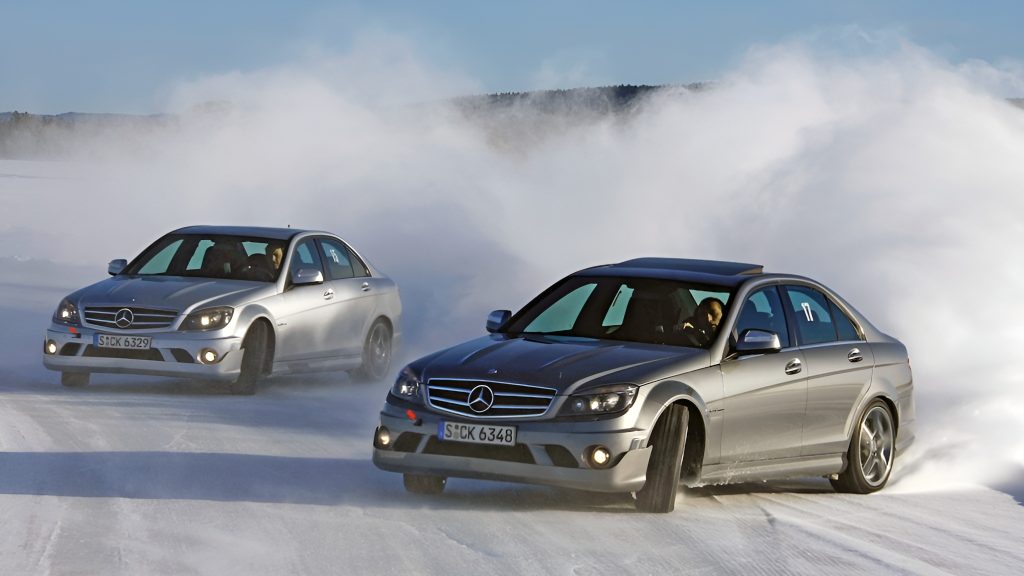
Snow and ice are extremely dangerous road conditions. When driving in winter, control, moderation, and calm reactions are critical. Always hold the steering wheel lightly and smoothly so you can feel loss of grip early. If understeer or oversteer happens, do not react by instinct with sudden steering inputs.
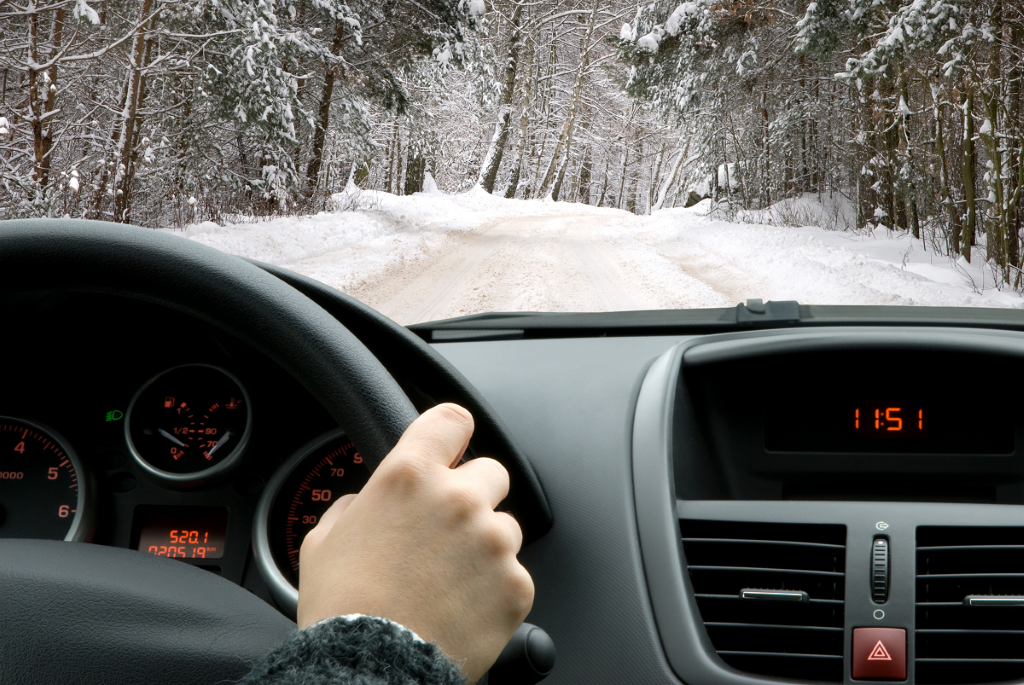
1. Steering
Driving on snow and ice requires smooth, careful, and precise steering movements. Sudden acceleration or braking can cause both the front and rear of the car to slide sideways. Aggressive throttle and sharp steering inputs only make the situation worse.
If the car starts to slide, immediately press the clutch pedal and release the brake as soon as possible. This helps the tires regain grip with the road surface. Steer in the direction of the slide until traction returns or the vehicle stops.
Avoid sudden acceleration and hard braking. Hold the steering wheel correctly and make only gentle inputs. Always adapt speed to road conditions and the limits of the vehicle.
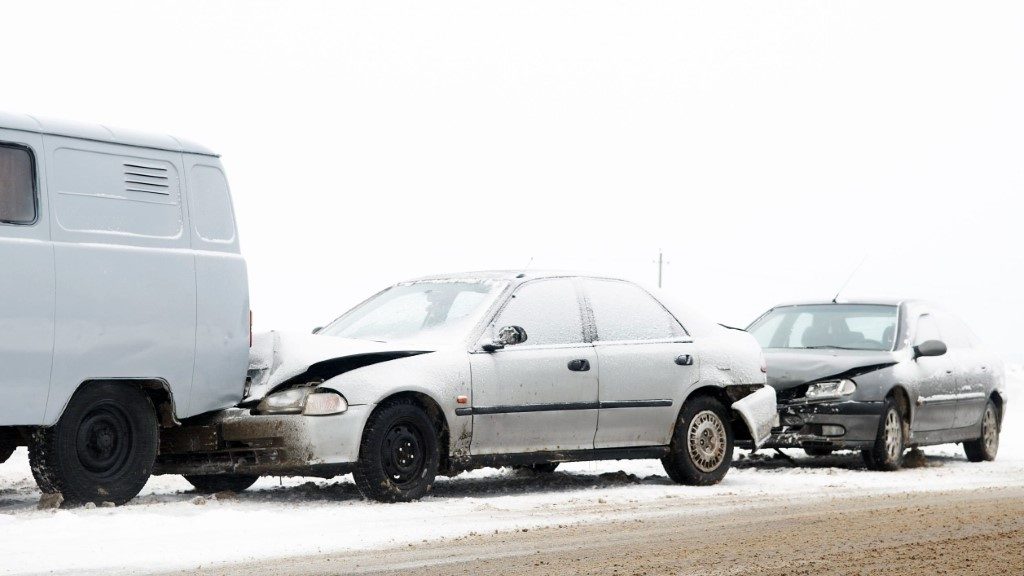
2. Keep Distance
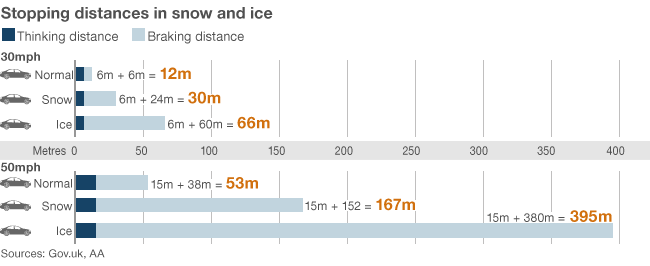
Maintain a large safety distance and adjust it to winter conditions. Slowing down and stopping must be possible without risk. On ice, braking distance can be up to ten times longer than on dry asphalt.
Front-wheel-drive cars are more sensitive when cornering on snow or ice. Rear-wheel-drive cars load the rear axle more and can transfer power better when accelerating. Each drivetrain reacts differently and must be driven accordingly.
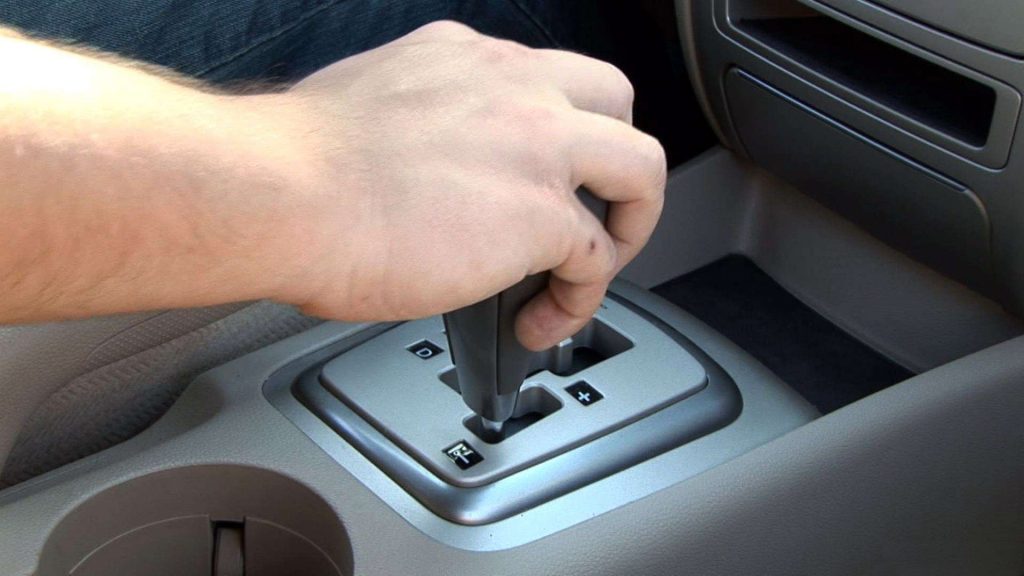
3. Gear Selection
Downshifting in front-wheel-drive cars increases load on the front axle, which requires extra caution when entering a corner. In rear-wheel-drive cars, engine braking affects the rear axle and can easily cause instability.
All-wheel-drive vehicles accelerate more evenly, but they are usually heavier, which means longer braking distances. All-wheel drive does not improve braking on ice.
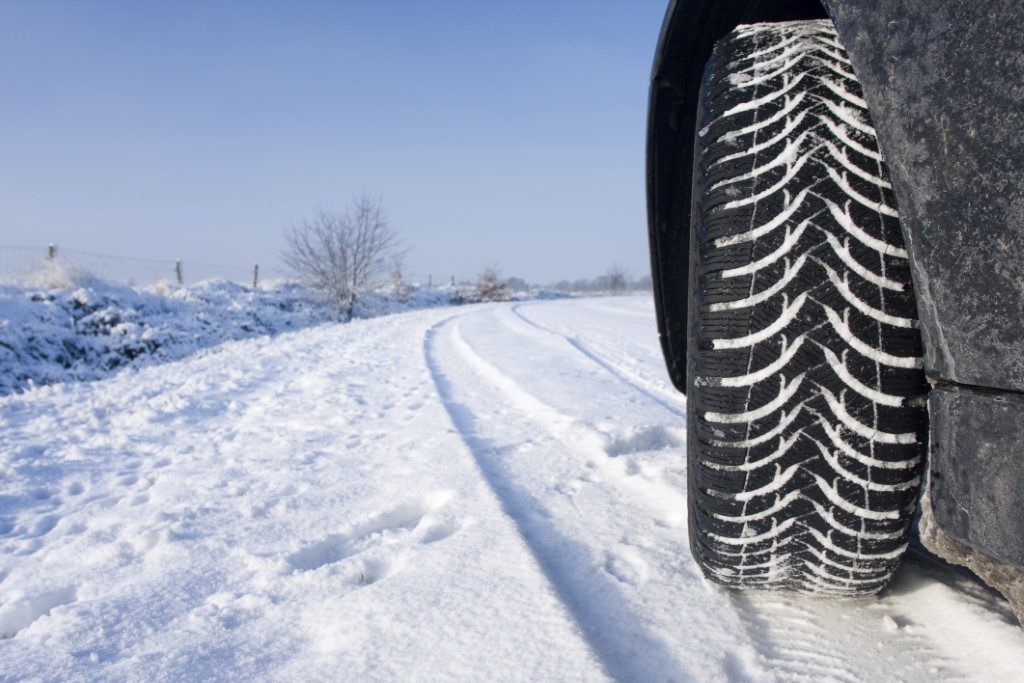
4. Skidding
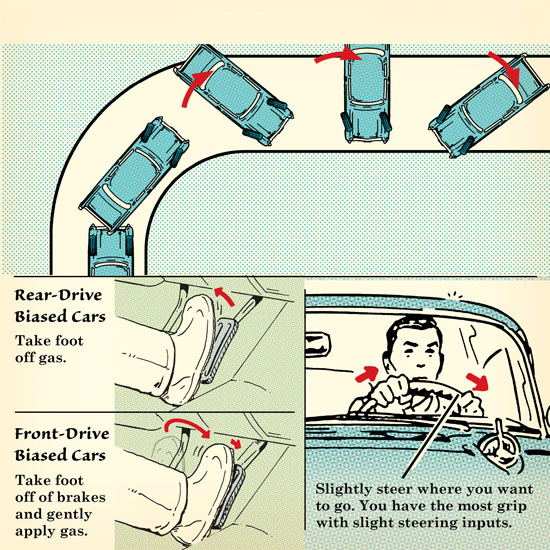
When the car starts to skid, gently steer as if you want to avoid the corner and press the clutch to unload the driven wheels. This allows the car to return to its original direction using inertia.
In extreme situations, apply very light braking with short pressure, never press the brake pedal fully.
5. Oversteer
Oversteer happens when the rear of the car loses grip and becomes unstable. This is most common in rear-wheel-drive vehicles. The car turns more than intended and rotates toward the inside of the corner.
How to react:
Turn the steering wheel in the direction of the skid. This counter-steering must be precise. Too little steering can cause a spin. Too much steering can lead to a sudden slide in the opposite direction.
Correct counter-steering can be learned quickly with practice. For rear-wheel-drive cars, this reaction must become instinctive.
6. Understeer
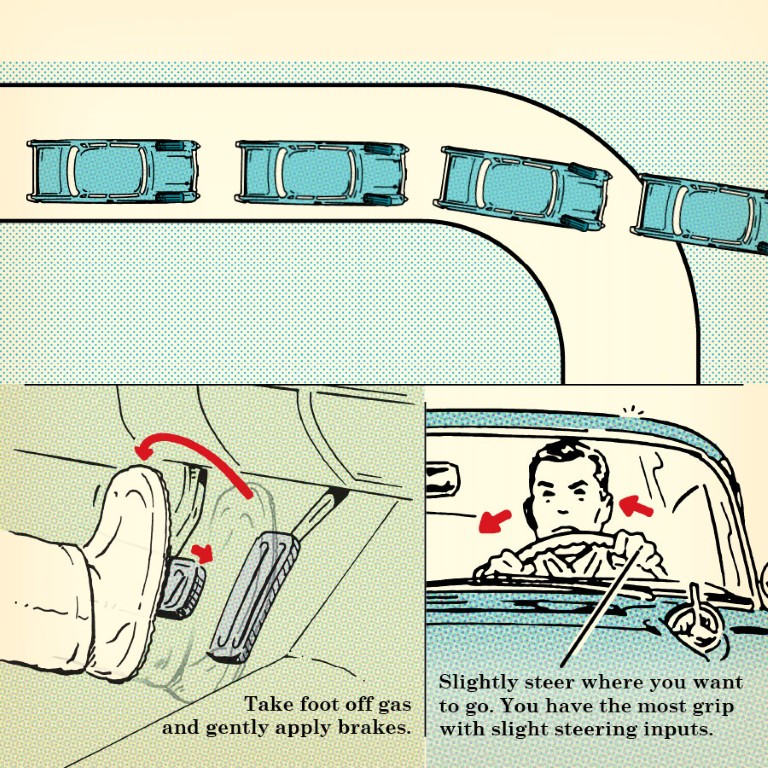
Understeer occurs when the front wheels lose grip. The car continues straight even though the steering wheel is turned. This requires a wider cornering line and increases the risk of leaving the road. Despite this, understeer is considered more stable than rear-end sliding.
How to react:
The steering wheel often feels light, followed by tire noise from the front. The car moves toward the outside of the corner.
The correct reaction is to stop power transfer to the wheels. In manual cars, press the clutch. In automatic cars, quickly lift off the throttle. At the same time, slightly reduce steering input. This helps the front tires regain grip and restores control.
Grip is the priority. These actions speed up the return of traction between the tires and the road.
7. Braking
Braking on snow and ice requires a different mindset. First, press the clutch pedal. Then apply light brake pressure so the car slows down gradually.
Let the vehicle rely on inertia and friction as much as possible. Apply the brake gently, release it, and repeat until the car stops. Pressing the clutch allows the car to stabilize itself and remain steerable.
Downshift earlier than usual to reduce speed progressively. Use the brake pedal gently. Hard braking can lock the wheels and cause loss of control. If the car starts to slide, do not brake suddenly.
Final Note
Be extremely cautious when driving on snow or ice. Accidents are far more common in winter conditions. You are not alone on the road, so drive with extra awareness for other road users. Calm inputs, smooth control, and respect for conditions significantly reduce the risk of an accident.