The global automotive industry is entering a new phase where trade policy, tariffs, and manufacturing decisions are closely connected. Rising import tariffs in the United States are forcing car manufacturers to rethink production strategies and supply chains.
Hyundai Motor has responded with a major investment plan that reflects both pressure and opportunity. This move shows how modern car production now depends as much on politics and economics as on engineering and design.
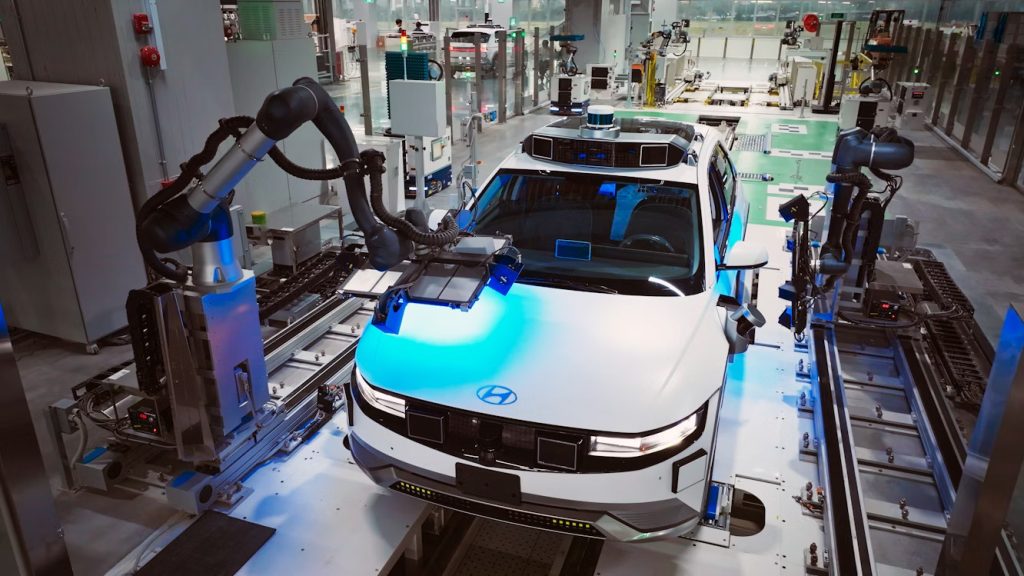
Hyundai Motor plans to invest more than $55.8 billion between 2026 and 2030 to expand production and develop new technologies. A large part of this investment will go into electric vehicles, research and development, and advanced mobility solutions. The company aims to increase its global production capacity to 6.2 million vehicles per year by the end of the decade. This aggressive growth strategy places Hyundai among the most ambitious players in the global car market.
The main driver behind this expansion is the impact of US tariffs on imported vehicles and parts. These tariffs have increased costs for foreign automakers and reduced profitability in key markets. Hyundai has already adjusted its financial expectations because of these pressures and is seeking ways to reduce exposure. Increasing local production in the United States has become a direct solution to this problem.
Hyundai plans to produce more than 80 percent of the vehicles it sells in the United States within the country by 2030. This is a major shift from current levels and reflects a strong push toward localization. The company is also increasing its use of locally sourced materials such as steel and batteries to support domestic production. According to CEO José Muñoz, this strategy is about building a more efficient and resilient automotive manufacturing system.

Beyond the United States, Hyundai continues to expand its global production network across regions such as India, South Korea, and the Middle East. New factories and upgrades to existing plants are expected to strengthen its international presence and improve supply chain flexibility. These investments are also likely to create jobs and support economic growth in multiple markets. At the same time, they reduce reliance on long and complex global supply routes.
However, the company faces several operational risks as it executes this large-scale plan. Rising costs, regulatory challenges, and unexpected disruptions can affect production timelines and overall efficiency. Tariffs have already created financial pressure, and further increases could lead to higher vehicle prices for consumers. These factors highlight the complexity of balancing growth with stability in the automotive sector.
Hyundai’s strategy represents a broader shift in the automotive industry toward localized manufacturing and stronger supply chain control. Automakers are moving production closer to key markets to reduce risk and improve efficiency. This transition may reshape the global car industry by reducing dependence on international trade networks. The long-term outcome will determine whether localization creates a more stable system or introduces new cost challenges for manufacturers and consumers.