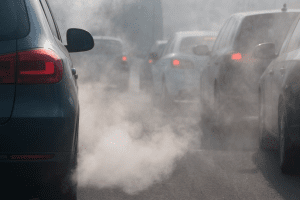
If your car suddenly starts emitting unusual smoke from the exhaust, stop driving immediately and check the engine oil and coolant levels. It could be your car’s way of telling you that something is seriously wrong.
Exhaust smoke in unusual colors is almost always a sign of trouble and often a sign you’re about to visit your mechanic (and your wallet). Whether the smoke is white, blue, or black, it can point to different types of mechanical issues, each with its own potential causes and severity.
Blue Smoke
If you’re seeing blue smoke from your exhaust, the likely culprit is burning oil inside the combustion chamber. This can be caused by:
- Worn piston rings or valve seals
- Oil leaking past the turbocharger seals
What this means: Your engine is consuming oil, and that’s a red flag.
When oil levels drop, the engine loses its lubrication, increasing wear on moving parts like the pistons, camshaft, and crankshaft. If ignored, this could lead to serious engine damage or even a complete engine failure.
Older engines can often be rebuilt or repaired. But with many modern engines, parts are designed with such precision that repairing worn components is either extremely expensive or impossible a full engine replacement might be your only option.
White Smoke (Like Steam)
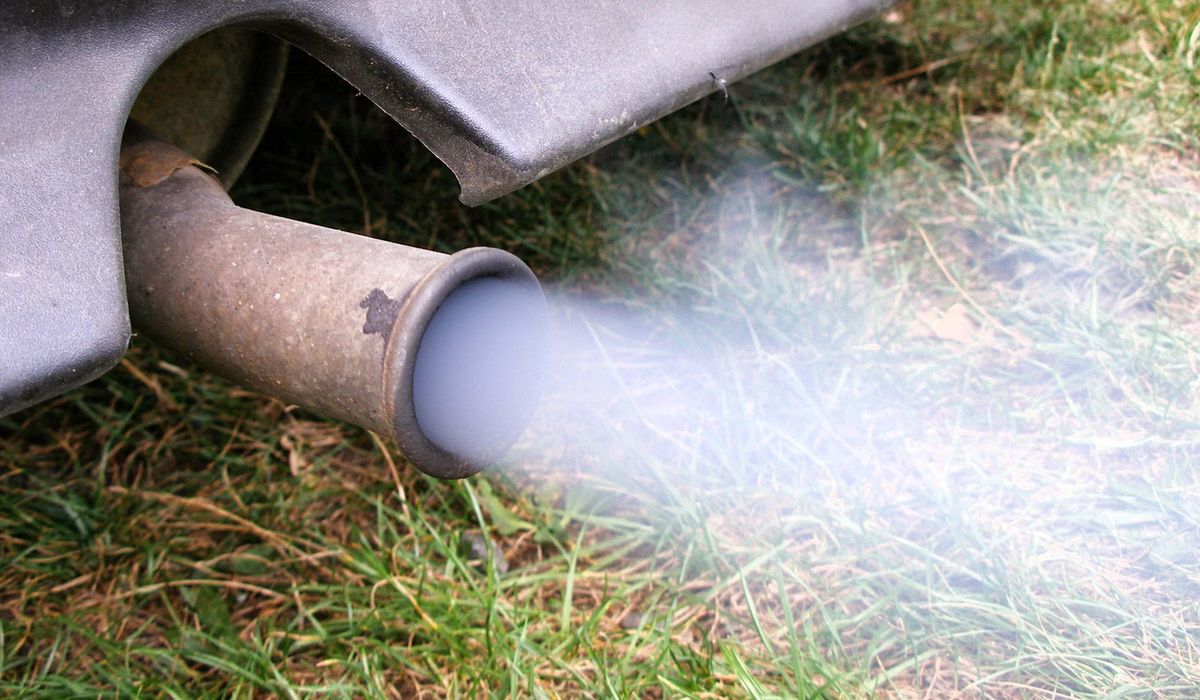
If white smoke appears only briefly after a cold start and quickly disappears, it’s likely just condensation evaporating from the exhaust system especially if you drive short distances often. In that case, it’s nothing to worry about.
But if you’re seeing thick, white smoke that lingers, that’s a different story.
This often means that coolant is leaking into the combustion chamber, most commonly due to:
- A blown head gasket
- A cracked cylinder head
You might also notice that the engine temperature is creeping up, which is another strong indicator of coolant loss.
What to do: Stop driving, check the coolant level, and contact a service center. If left unchecked, overheating can cause catastrophic engine damage.
Black Smoke
Black smoke usually means the engine is running too rich—that is, it’s burning too much fuel.
In gasoline engines, this could be due to:
- A dirty air filter
- Malfunctioning fuel injectors
- Sensor issues (like a faulty MAF sensor)
In diesel vehicles, especially older models or those frequently used for short city drives, black smoke can come from:
- A soot-clogged diesel particulate filter (DPF)
If the DPF becomes too full, you might see a thick cloud of black smoke and even a warning light on the dashboard.
The fix? Take your diesel out on the highway for a longer, higher-speed drive. This will help burn off excess soot and restore filter function—often accompanied by a short burst of dark smoke as the DPF regenerates.
What Should You Do If Your Car Starts Smoking?
If any of these symptoms appear suddenly, follow these steps:
- Pull over safely.
- Check engine oil and coolant levels. If either is low, that’s a strong clue as to the cause.
- If levels are normal, track your fuel consumption over the next 100–500 kilometers. A sudden jump of 1–2 liters per 100 km could indicate a problem with fuel combustion or injection.
Final Tip
Always refer to your vehicle’s owner manual before making assumptions—or better yet, contact a service technician. Describing the color and behavior of the smoke can help a mechanic diagnose the problem remotely and advise whether it’s safe to continue driving.
Bottom line: Any unusual exhaust smoke is your car’s way of crying for help. Don’t ignore it—act early, and you might save yourself from a much more expensive repair later.