Modern cars increasingly come with multiple driving modes, even when they are not part of the premium segment. What ten years ago was reserved for sports cars and luxury sedans can now be found in city hatchbacks and mid-size SUVs. Most drivers have at least two options — Eco and Sport — while more expensive models also offer additional settings such as Comfort, Sport+, and even dedicated off-road programs. The real question is how many drivers actually use these features and whether they make a tangible difference in everyday driving.
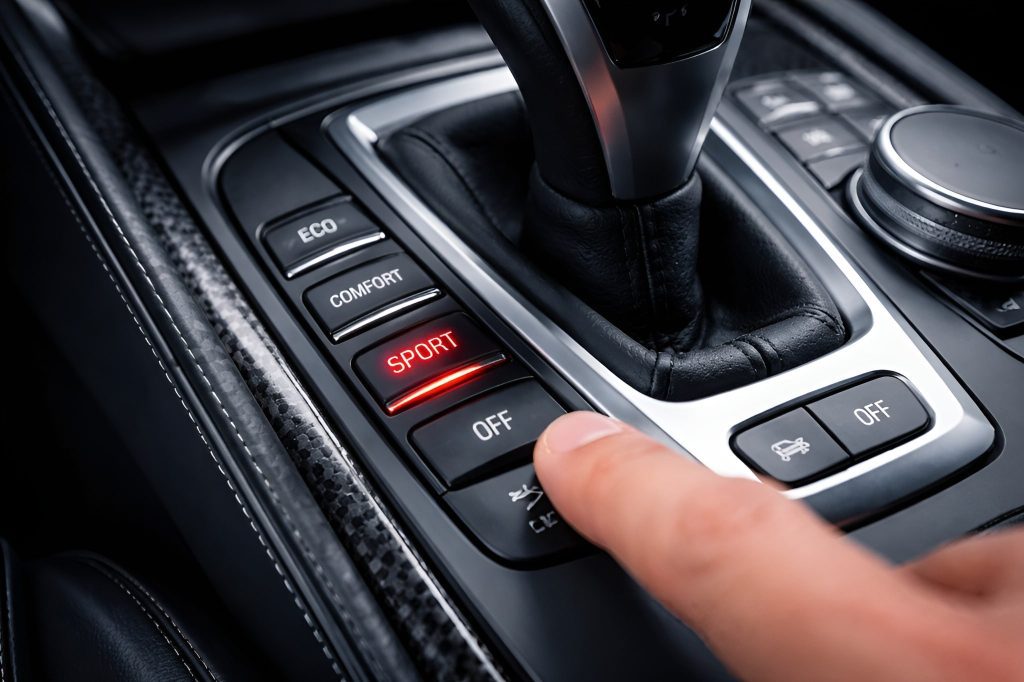
If you are wondering what all of this is really for, it helps to look at how a typical car with three basic driving modes works. Eco Mode is usually designed to reduce fuel consumption and make the car feel more relaxed. In practice, this means slower throttle response and, in some vehicles, reduced air-conditioning output to save additional energy. Certain models, such as BMWs from the 2010s, also feature a “coasting” function that allows the car to roll downhill at very low engine speeds, significantly lowering fuel consumption and making long-distance driving easier.
Comfort Mode, on the other hand, represents the middle ground. This is the setting most drivers use on a daily basis, as it combines sufficient comfort with a natural engine and transmission response. In city traffic or on longer journeys, Comfort delivers a balanced and relaxed driving experience without unnecessarily stressing the drivetrain.
Sport Mode changes the car’s character entirely. Throttle response becomes sharper, the transmission holds lower gears for longer, and in more advanced vehicles the suspension and steering stiffness are also adjusted. Drivers most often select Sport on winding roads or mountain climbs, where extra agility and faster reactions translate into greater control and more driving enjoyment. Sport Mode does not necessarily mean aggressive driving; it simply allows the car to respond more quickly to inputs, which can also be a safety advantage in certain situations.
More advanced vehicles also offer additional settings such as Sport+, which increases throttle sensitivity and shift aggressiveness while partially reducing stability control systems. This option is intended for experienced drivers or situations where you want to explore the car closer to its limits. SUVs often add dedicated off-road modes as well. For example, the Toyota 4Runner allows drivers to tailor the vehicle for sand, mud, or rocky terrain, optimizing drivetrain behavior and electronic systems for each surface.
The real value of driving modes becomes clear when they are used in the right situations. On the highway, Eco Mode lowers fuel consumption and delivers a quieter, more economical ride. In urban environments, Comfort is usually the most pleasant choice, offering a balance between responsiveness and comfort. On mountain roads or twisty local routes, Sport Mode provides added confidence and control, while dedicated off-road programs make challenging terrain easier to handle.
Although some drivers see driving modes as a marketing gimmick, the fact remains that they can significantly influence driving feel, fuel consumption, and safety. Everything depends on how willing you are to experiment and adapt your driving style to road and weather conditions. If you are someone who always sticks to the default setting, it may be time to explore the different modes your car has to offer.
In the end, the question remains: do you regularly use all the capabilities your car provides, or do you stick to a single mode regardless of the road and conditions?