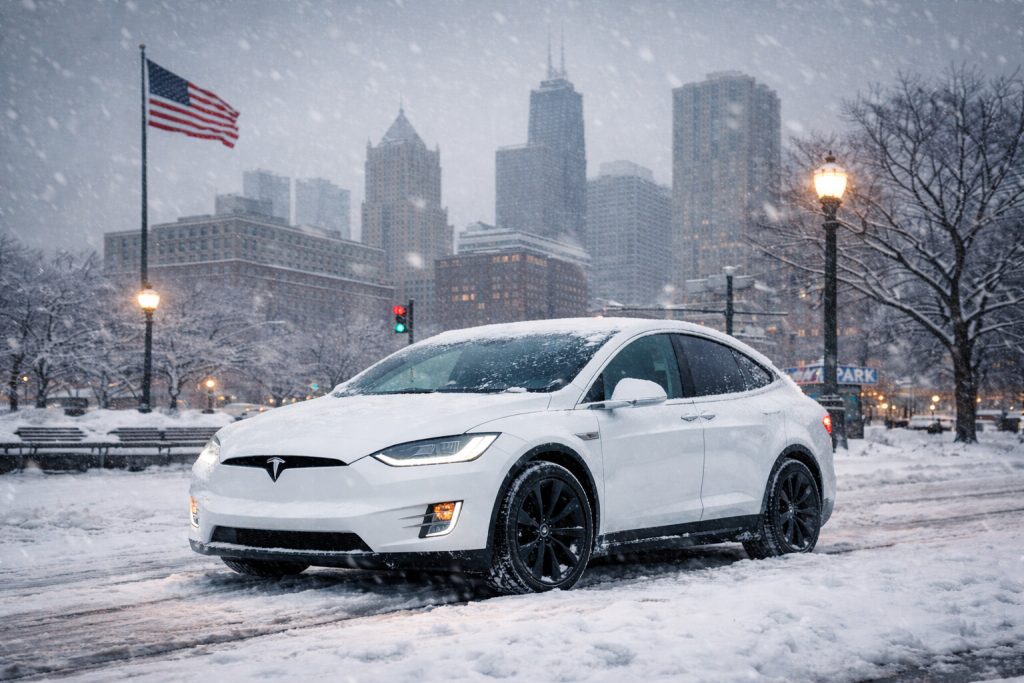
Cold weather reduces battery efficiency in electric vehicles, which directly lowers driving range. Winter also increases energy use for cabin heating, battery conditioning, and traction systems. With correct charging habits, driving behavior, and tire choice, winter range loss can be significantly reduced. The following guidance is adapted for daily EV use and optimized for real-world conditions.
🔌 Preheat While Plugged In
Preheating the cabin and defrosting windows while the vehicle is still connected to a charger preserves battery energy for driving. When heating is powered by the grid instead of the battery, usable range increases noticeably.
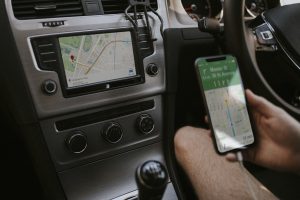
Most modern EVs allow remote preconditioning via smartphone apps, enabling cabin warming before departure without draining the battery.
🚗 Drive Smoothly and Avoid Hard Acceleration
Rapid acceleration drains the battery faster, especially when cells are cold. Gentle throttle input reduces peak energy demand and improves efficiency.
Smooth driving also improves traction on cold or slippery surfaces, increasing safety while preserving range.
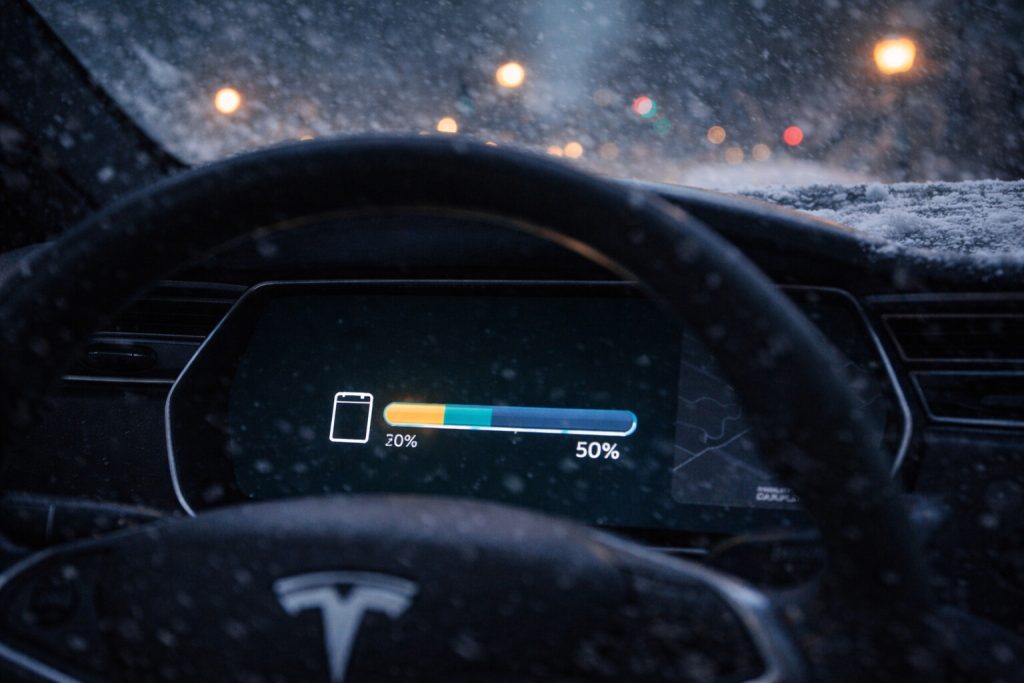
🔋 Keep Battery Charge Above 20%
Do not allow the battery to drop below 20% in winter. Low temperatures slow chemical reactions inside lithium-ion cells, reducing usable capacity and increasing charging time. EVs also consume energy to warm the battery before driving, which further reduces available range if the charge level is already low.
Charge overnight whenever possible and park in a garage or sheltered area to reduce exposure to extreme cold.
🛞 Maintain Correct Tire Pressure
Cold air lowers tire pressure, increasing rolling resistance and energy consumption. Underinflated tires force the motor to work harder, shortening driving range.
Check tire pressure more frequently in winter and keep it at manufacturer-recommended levels. Proper inflation improves efficiency, stability, and braking performance.
❄️ Use Winter Tires Designed for EVs
Electric vehicles are heavier than combustion cars due to battery weight and require tires that handle both load and torque efficiently.
EV-optimized winter tires offer lower rolling resistance while maintaining strong grip, helping reduce energy loss and extending driving distance in cold conditions.
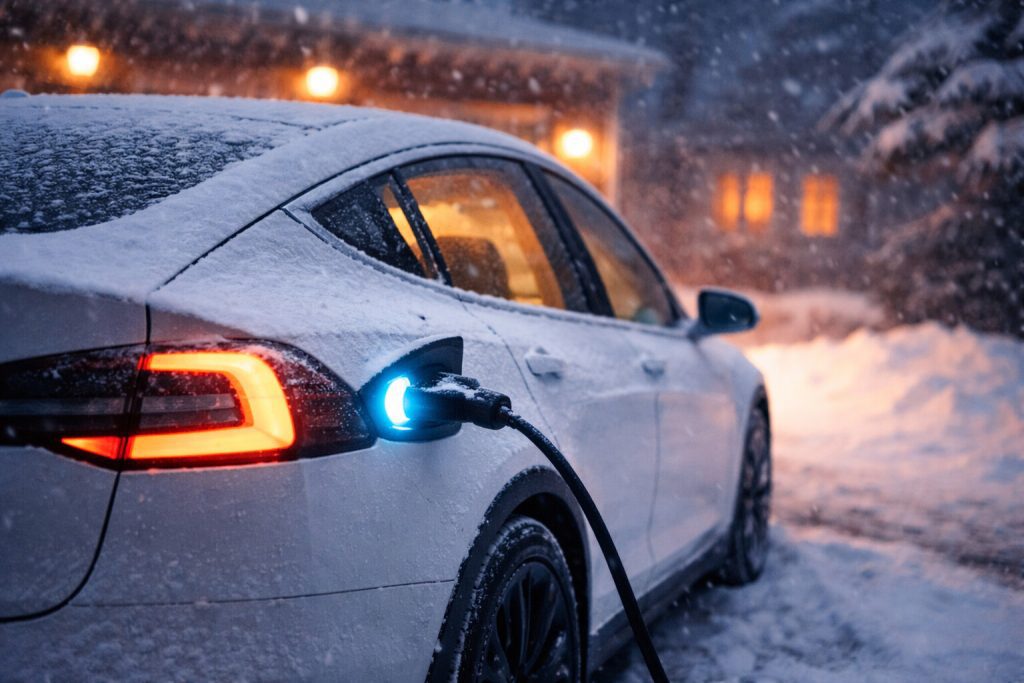
🏠 Charge More Often, Not Just When Empty
In winter, frequent shorter charging sessions are better than waiting for deep discharge. Batteries perform best within moderate state-of-charge ranges, especially in low temperatures.
Regular charging keeps battery temperature more stable and reduces stress on cells, improving both efficiency and long-term battery health.